How to Clean Carpets and Maintain Your Cleaner: The Ultimate WA Guide
You've spent the morning scrubbing stubborn Perth red dirt out of the hallway, only to realise your carpet cleaner now smells worse than the stain you just removed. It's a common frustration for WA tenants who want a pristine home but fear losing their bond due to poor carpet condition or equipment failure. Understanding professional carpet cleaning benefits starts with knowing that deep-seated grit requires more than just a quick surface scrub.
We understand that maintaining a healthy Australian home shouldn't feel like a second job. You want results that last and equipment that works every time you plug it in. Whether you're dealing with the aftermath of a pet or preparing for a final inspection under the 2026 Residential Tenancies Act updates, getting the technique right is essential for your peace of mind.
This guide provides the definitive roadmap to mastering professional-grade carpet maintenance. You'll learn how to keep your cleaning equipment in peak condition and handle spills before they become permanent fixtures. We're moving from DIY guesswork to a streamlined, expert approach that saves you time and protects your property investment.
Key Takeaways
- Identify your specific carpet fibre to choose the right treatment for Perth's unique red dirt and coastal sand.
- Master the "Triple-Pass" vacuuming technique and learn why over-saturating your carpet with shampoo actually attracts more dirt.
- Discover the essential professional carpet cleaning benefits that ensure you meet strict WA tenancy agreement standards for bond returns.
- Keep your equipment functional and odour-free by following a strict sanitisation routine for recovery tanks and brush rolls.
- Access an emergency response plan for common Australian household spills, from red wine to pet accidents in the summer heat.
Table of Contents
- Understanding Your Carpet and Professional Carpet Cleaning Benefits in WA
- Step-by-Step Guide: How to Clean Carpet with a Machine
- The Australian Stain Removal Handbook: Dealing with Stubborn Spills
- Equipment Care: How to Clean Your Carpet Cleaner Machine
- Professional Carpet Cleaning Benefits vs DIY: Making the Right Choice for Your Bond
Understanding Your Carpet and Professional Carpet Cleaning Benefits in WA
Owning a home in Western Australia means battling a specific set of environmental elements. From the fine coastal sand of Fremantle to the iron-rich red dust of the Perth Hills, your carpets endure more than just foot traffic. Understanding the full range of professional carpet cleaning benefits is the first step in protecting your investment. Most homeowners don't realise that up to 70% of the soil in their carpet is dry particulate matter. This grit acts like tiny knives, cutting into the fibres every time you walk across the room.
Standard vacuuming is an essential first step, but it only addresses the surface. Deep-seated grit and oily residues require professional-grade extraction to prevent permanent damage. Regular maintenance isn't just about aesthetics; it's a strategic move to extend the life of your flooring and maintain a healthy indoor environment.
Common Carpet Fibres in Australian Homes
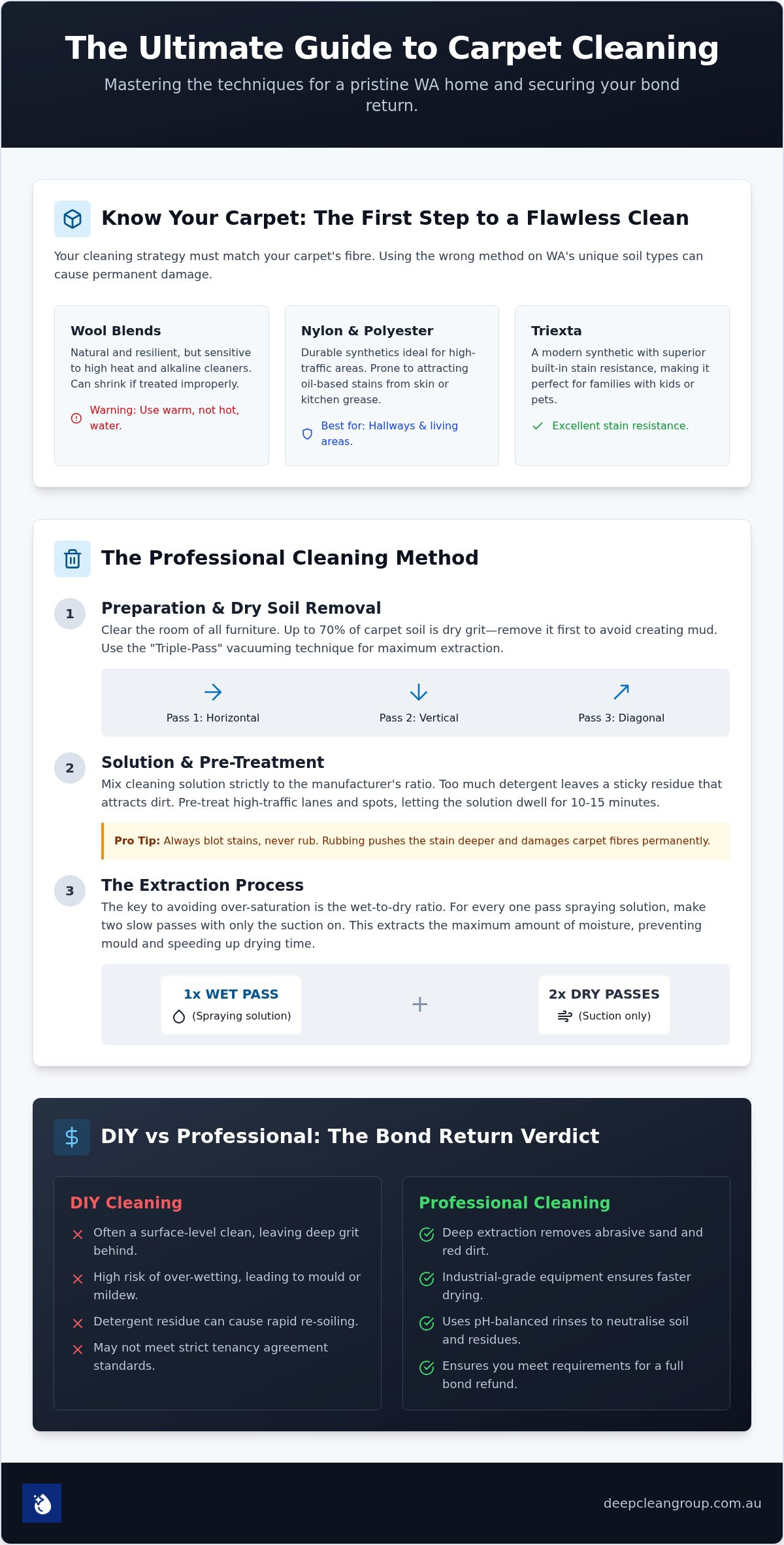
Your cleaning strategy must match your carpet's DNA. Wool blends are popular in premium Perth residences for their natural resilience and insulation. However, wool is sensitive to high heat and alkaline chemicals, meaning a "one size fits all" DIY approach can lead to shrinkage or fibre distortion. Nylon and polyester are the workhorses of high-traffic areas in suburbs like Joondalup. These synthetics are durable and handle heavy cleaning well, but they tend to attract oil-based stains. Triexta is a modern alternative that offers superior stain resistance, making it a favourite for families with pets or young children. Identifying your fibre type ensures you don't accidentally void your warranty or ruin the pile during a deep clean.
The Impact of the WA Environment
The Western Australian climate presents unique challenges for carpet longevity. Coastal sand is exceptionally abrasive. If left at the base of your carpet pile, it grinds away at the backing and thins the fibres. In northern suburbs, the alkaline nature of local garden soils can track indoors and react with certain dyes, causing yellowing or browning over time. Professional carpet cleaning benefits include the use of pH-balanced rinses that neutralise these environmental contaminants.
Investing in regular deep extraction is significantly cheaper than a full carpet replacement. By removing the "sandpaper effect" of Fremantle sand and the staining potential of red dust, you keep the pile plush and the colours vibrant. For tenants, this level of care is often the difference between a full bond refund and a costly dispute with a property manager.
Step-by-Step Guide: How to Clean Carpet with a Machine
Transforming your carpets from dusty to decontaminated requires a methodical approach. Start by clearing the room entirely. Moving furniture allows for an even clean and prevents timber stains or rust marks from furniture legs. Once the floor is clear, use the "Triple-Pass" vacuuming technique. This involves vacuuming the entire area horizontally, then vertically, and finally diagonally. This process ensures you lift the 70% of dry soil mentioned earlier, preventing it from turning into mud once you add water.
When mixing your cleaning solution, resist the urge to add extra detergent. Excessive "shampoo" leaves a sticky residue that acts like a magnet for dirt, causing your carpets to look soiled again within weeks. Stick strictly to the manufacturer's dilution ratios. While these steps help maintain your floors, they often highlight the stark difference in power when compared to the carpet steam cleaning results achieved by industrial-grade equipment.
Pre-Treatment and Spot Cleaning
Identify high-traffic lanes in your hallway or living area before starting the machine. These zones accumulate oily binders from skin contact and kitchen grease that water alone cannot break down. Apply a dedicated pre-spray to these areas and let it dwell for 10 to 15 minutes. During this time, tackle individual spills using the "Blot, Don’t Rub" rule. Rubbing a stain pushes the liquid deeper into the backing and frays the delicate carpet fibres, making the damage permanent.
The Extraction Process
Water temperature is critical for success. For synthetic fibres, hot water helps break down oils, but for wool blends, keep the water warm to avoid shrinkage. The core of a successful deep clean is the wet-to-dry ratio. For every one wet pass where you pull the trigger, follow up with two dry passes to ensure maximum moisture removal. A dry pass is a slow stroke made with the machine's suction engaged but without pulling the spray trigger, designed to extract as much moisture and residual detergent as possible.
Avoiding over-wetting is the best way to prevent browning, shrinkage, and the dreaded "wet dog" smell. One of the major professional carpet cleaning benefits is the use of high-powered vacuums that extract 90% of the water used, something most domestic machines simply cannot match. If the carpet feels soggy to the touch, you have used too much water and need to perform additional dry passes immediately.
Finally, capitalise on the Perth breeze. Open windows and doors to create a cross-breeze, or use floor fans to speed up the drying process. In the WA climate, aim for a drying time of less than six hours to prevent mould spores from germinating in the damp underlay.
The Australian Stain Removal Handbook: Dealing with Stubborn Spills
A spilled glass of Shiraz or a dropped latte doesn't have to mean the end of your lounge room carpet. The key is an immediate, methodical response. For red wine and coffee, your first tool is a clean white towel. Blot the area firmly to pull liquid out of the pile. Never rub the spill, as this action permanently damages the fibre structure and pushes the pigment deeper into the backing. If the stain has already set, you might start to see the professional carpet cleaning benefits of high-pressure steam, which can break down bonds that domestic sprays simply cannot touch.
Pet accidents require extra care, especially in the Rockingham heat. High temperatures accelerate the breakdown of urea, leading to pungent ammonia smells that linger in the underlay. Use an enzymatic cleaner rather than a standard disinfectant to neutralise the odour at its source. For mud and red dust, the rules change. You must let these dry completely before attempting removal. Trying to clean wet red dirt creates a permanent dye that stains the fibres. Once dry, you can vacuum up the bulk of the particulate before treating the remaining shadow.
Kitchen-to-living room transfers often involve oil and grease. These sticky residues are difficult to remove because they repel water-based cleaners. A small amount of surgical spirit on a cloth can help dissolve the oil, but be cautious of the backing. If you notice a stain reappearing days after you cleaned it, you are experiencing "wicking." Wicking is the process where deep-seated liquid in the carpet backing travels up the fibres to the surface as the carpet dries, usually caused by over-wetting during the initial clean.
The Emergency Spill Kit
Forget the viral hacks involving white vinegar and bicarb soda. While vinegar is a mild acid and bicarb is a base, mixing them simply creates salt water and carbon dioxide, which does very little for a deep stain. Your kit should focus on high-absorbency white towels and a pH-neutral spotter. Avoid using dish soap at all costs. Dish soap is designed to be rinsed off plates with high-pressure water. On a carpet, it leaves a sticky residue trap that attracts dirt like a magnet, creating a dark patch within days.
Specific WA Stain Challenges
Living in Mandurah or regional Perth areas means dealing with iron-rich red dust that behaves differently than standard house dust. This dust is chemically reactive and can "cook" into the fibres during hot WA summers. In coastal properties like Cottesloe, salt spray creates a microscopic sticky film on your carpet that binds with household dust. Even organic matter from local flora, such as gum tree sap, requires specific solvent-based treatments. Regular maintenance ensures these local environmental factors don't lead to premature fibre degradation or permanent discolouration.
Equipment Care: How to Clean Your Carpet Cleaner Machine
Maintaining your equipment is the only way to ensure it performs when you need it most. Understanding professional carpet cleaning benefits often highlights the difference between a well-maintained tool and a neglected one that spreads more dirt than it removes. Storing a wet machine leads to permanent, sour odours that are nearly impossible to remove from the internal housing. Start by emptying the recovery tank immediately after finishing. Rinsing with water is a start, but you should use a mild disinfectant solution to kill lingering bacteria that thrive in damp environments.
Next, inspect the brush rolls. Hair, lint, and carpet fibres naturally tangle around the cylinder, which increases friction and strains the motor. Use a pair of scissors to carefully snip away these tangles without nicking the bristles. This simple step preserves the machine's mechanical integrity and ensures an even scrub on your next job. Clogged filters also kill suction, so remove and rinse them under warm water until they are clear of fine silt.
Perth's water supply often contains high mineral content, which can lead to limescale build-up in the internal spray lines. Periodically flushing the system with a solution of warm water and a small amount of white vinegar prevents these blockages. Always check your manufacturer's warranty before using additives. One of the key professional carpet cleaning benefits is that experts use industrial machines with high-flow pumps that are serviced daily to avoid these common failure points.
Post-Clean Sanitation
Wipe down the nozzle and all suction pathways with a microfibre cloth. Debris often collects in the throat of the machine, which restricts airflow and reduces suction power. Ensure every component is bone-dry before reassembly. If you find machine maintenance too time-consuming, you can always book a professional carpet steam clean through our platform and skip the cleanup entirely.
Long-Term Storage Tips
Check the drive belt and motor for signs of wear or a burning smell after a heavy session. These parts are the heart of the machine and often fail due to overheating in the WA summer. Store your cleaner in a cool, dry internal cupboard. Never leave it in a garage or shed where the harsh WA sun can perish the plastic tanks and rubber seals. Finally, ensure both the clean water and recovery tanks are completely empty and dry to prevent seal degradation.
Professional Carpet Cleaning Benefits vs DIY: Making the Right Choice for Your Bond
The power gap between a domestic portable unit and a professional truck-mount system is significant. While a store-bought machine might refresh the surface, it often lacks the heat and suction required for true decontamination. Professional carpet cleaning benefits include the use of high-pressure steam that reaches the base of the pile, extracting the deep-seated grit that domestic vacuums simply cannot reach. This industrial-grade extraction ensures that your carpets aren't just visually clean, but structurally preserved.
Choosing a professional service is a strategic decision for your bond. Under the updated 2026 Residential Tenancies Act in WA, property managers have become increasingly focused on floor conditions and hygiene standards. Deep Clean Group bridges the gap between physical labour and digital convenience by providing vetted professionals who understand these local requirements. A dated invoice from a professional cleaner serves as a definitive answer to disputes over "fair wear and tear" versus avoidable staining.
The Bond Back Guarantee
A professional receipt is your best insurance policy for a smooth move. Perth property managers frequently reject DIY efforts because home machines often leave behind too much moisture, leading to the wicking and browning issues discussed in earlier sections. Common DIY mistakes, such as using the wrong chemical dilution for wool blends, can lead to permanent damage and expensive bond deductions. Using a professional ensures the job meets the high-intensity vacate cleaning standards required for a full refund without the stress of a re-clean.
Health and Hygiene Benefits
Beyond the bond, professional-grade sanitisation removes deep-seated allergens and dust mites that domestic machines miss. Portable rental units often leave the carpet damp for too long, which can encourage fungal growth in the underlay during the humid months. Our vetted professionals use high-powered extraction to ensure the floor is dry and safe for your family within hours. If you want to skip the manual labour and guarantee a result that passes any inspection, download the Deep Clean app to book a pro clean today.
Before handing back your keys, use this final checklist to ensure your carpets are ready for the property manager:
- All high-traffic grey lanes in hallways have been lifted and restored.
- No sticky chemical residue remains (the carpet should feel soft, not crunchy).
- The pile is uniform and free of furniture indentations or rust marks.
- You have your professional cleaning receipt ready to attach to your final report.
Secure Your Bond and Protect Your Investment
Mastering carpet maintenance is about more than just aesthetics. It's a strategic approach to protecting your property and ensuring a healthy living environment. While regular DIY care and proper equipment sanitisation are essential for day-to-day upkeep, they cannot replace the restorative power of industrial steam extraction. The most significant professional carpet cleaning benefits involve the complete removal of abrasive particulates and allergens that domestic units often leave behind.
Deep Clean Group simplifies this process by connecting you with vetted independent cleaners across WA. We specialise in high-intensity vacate cleaning for those critical bond returns, backed by 20 years of professional industry experience. You don't have to struggle with stubborn stains or equipment failures when an expert solution is available on demand. Download the Deep Clean Marketplace Mobile App to book a pro today. Take the stress out of property maintenance and get the professional results your home deserves.
Frequently Asked Questions
How do I clean my carpet cleaner machine after use?
Empty the recovery and solution tanks immediately to prevent bacterial growth and sour odours. Rinse the recovery tank with a mild disinfectant to eliminate lingering germs. You should also use scissors to remove hair and fibre tangles from the brush rolls and wipe down the suction nozzle. Always ensure every component is bone-dry before reassembly to avoid internal mould. Proper maintenance ensures your machine remains a functional tool rather than a source of contamination.
Can I use dish soap in my carpet cleaning machine?
No, you should never use dish soap in a carpet cleaning machine. Dish soap is designed for high-pressure rinsing on hard surfaces; in carpet, it leaves a sticky residue that acts as a magnet for dirt. This often results in dark patches appearing shortly after cleaning. Stick to low-foaming detergents designed for extraction machines to ensure you don't void your warranty or ruin the pile with excessive suds.
How long does it take for carpets to dry in Perth?
Carpets in Perth typically take between four and six hours to dry, depending on the season and ventilation. During the hot, dry summer months, drying times are faster, but you must ensure a cross-breeze by opening windows and doors. In more humid coastal areas, using floor fans or air conditioning on a dry cycle helps. Avoid walking on the carpet until it is completely dry to prevent re-soiling the damp fibres.
Is it better to steam clean or shampoo carpets?
Steam cleaning, or hot water extraction, is superior for deep sanitisation and dirt removal. While shampooing uses rotating brushes to scrub the surface, it often leaves behind chemical residues and doesn't reach the base of the pile. One of the major professional carpet cleaning benefits of extraction is that it pulls out the deep-seated soil trapped within the fibres, providing a more thorough and hygienic result for your home.
How often should I clean my carpets in a WA home?
Most WA homes require a professional deep clean every six to twelve months. If you live in regional areas with heavy red dust or have pets and young children, you should increase this frequency to every six months. Regular extraction prevents abrasive sand and grit from grinding down the fibres, which significantly extends the life of your flooring. Maintenance is always more cost-effective than a full carpet replacement due to neglect.
What is the best way to remove red dirt from white carpet?
You must allow red dirt to dry completely before attempting any removal. Once dry, vacuum the area thoroughly to lift the bulk of the iron-rich particulates. If a stain remains, use a dedicated pH-neutral spotter rather than water, which can turn the dust into a permanent dye. For white carpets, the precision of a professional extraction system is often necessary to fully lift the pigment without causing wicking or spreading the stain further.
Can I clean my carpet cleaner with vinegar?
You can use a diluted white vinegar solution to flush the internal lines of your machine. This is particularly effective in Perth, where high mineral content in the water can lead to limescale build-up in the spray nozzles. Mix one part vinegar with ten parts warm water and run it through a clean cycle. However, always check your manufacturer's manual first, as some warranties forbid the use of anything other than approved cleaning solutions.
Does professional carpet cleaning remove all stains?
While professional systems can remove the vast majority of household spills, some substances cause permanent dye changes or fibre damage. Stains like bleach, certain hair dyes, and old "cooked-in" red wine may be permanent. However, professional carpet cleaning benefits include access to specialised heat-transfer techniques and industrial-strength spotting agents that can lift marks DIY machines cannot touch. An expert technician can typically provide a realistic assessment of what is removable upon inspection.